

We set ourselves up to live in constant shame, with every step forward feeling like an apology for who we were before.
Grab a warm beverage if you’d like, and I’ll read it to you:
Thanks to our subscribers for keeping audio versions of new posts free for everyone! Learn more.
—
Ten years ago, when I was just 22 years old, I left my home state of Michigan, hoping that the distance would allow me to leave my painful past behind.
I was imagining a new, fabulous life in the San Francisco Bay Area, though in hindsight, I wasn’t prepared for what it meant to be an “adult.” This move came after many years of coercive control that didn’t allow me any agency, or even a grounded sense of self.
In many ways, my move felt more like a desperate escape than the fun cross-country adventure I told people it was.
With naive optimism and a tender heart, I decided to start a blog to document the journey.
But deeper than that, I set out to tell the story of the self I’d had to bury, determined to set him free.
Claiming my story publicly felt like finally having ownership of myself.
While I chose to omit the details of what had really brought me to California, I dove headfirst into vulnerable shares about mental health diagnoses, gender transition, queer identity, and so much more, defying the rules I’d left behind that said I needed to be silent.
Through it all, I’d hoped that sharing a small part of my journey might be meaningful to someone else who was struggling.
I can honestly say that I never published a single article on the internet without thinking about the survivors who, like me, had googled “help I want to die” and “I can’t do this anymore” because it felt like there were no options left.
What I didn’t expect was that, within three months of launching my virtually unknown blog — and just one year of living as an autonomous adult for the first time, in relative safety — I would be catapulted into hypervisibility after a post of mine went massively viral.
To put it into perspective: I went from having a few hundred views total (just friends and a few friends-of-friends) to having six million readers in nearly every country in the world, virtually overnight.
It was never my plan to go viral or to build a “following,” but suddenly, I had the attention of an audience so much larger than I could have imagined.
And in the years that followed, it was your belief in me — that my voice had value — that ultimately changed the entire trajectory I was on.
More than ten years later, I’m absolutely beaming. But maybe not for the reasons you might think.
I’m still shocked and humbled by the support I’ve received from what I’ve created since then — an entire body of work that, while not perfect by any stretch, genuinely reached people in the ways I’d hoped it would, planting seeds of curiosity, compassion, and maybe even courage.
It still feels weird to say, because sometimes it still feels weird to think of myself as being important (as I’ve said, we’re all in a process here!).
But while I’m still proud of what I was able to offer my community, I think what I’m most proud of today is that I’ve outgrown this thing that I built all those years ago.
I’m proud because the story I thought I was here to tell isn’t quite the story I want to tell anymore.
When I started writing publicly a decade ago, I had a very specific narrative about myself. I was “mentally ill,” which meant that my brain was disordered and deficient and in need of fixing.
And so I ran and ran on this hamster wheel of therapy, self-help books, medications, hospitalizations. If you were a therapist with a podcast in the 2010s, I’m sure I’d recognize your voice at this point.
I was driven to have my “illness” cured, but what that really meant to me was that I’d become a version of myself that I was no longer ashamed of being.
For years, without fully realizing it, the story I shared with the world was that while I was broken, I could still be redeemed.
I guess I wanted this hero’s journey, where I “fixed” myself and lived happily ever after. Or at least, coped adequately ever after?
But underneath that, what I didn’t realize at the time was that it was easier to label myself broken — to believe that I was inherently the problem — than to reckon with where that story of brokenness came from in the first place.
That’s not to say that things like therapy and medication can’t be supportive tools. But so long as I saw them as The Answer to my brokenness, I was only ever reaching for those tools from a place of shame, rather than a place of care.
I don’t say that as a judgment of where I was, though. It’s a story I carried with me all of my life.
If I was the problem, at least I could do something about it, couldn’t I? If I was inherently broken, it meant that there was something I could do to fix it, to fix me.
And maybe that would fix my parents, my family, my pain, my past.
But if I called myself the problem, I didn’t have to confront the ways in which I was harmed. I didn’t have to accept a more painful truth: Someone hurt me, and there was nothing I could have done — and no one I could have become — to prevent it.
I have a lot of love in my heart for the past versions of me that clung to this story, because it was the story we needed at the time. And I have deep appreciation for how my younger self transmuted that story, and tried to do something good in the world. I really, deeply respect that.
And, the truth is more complex, in that a story of self-blame and overcoming my flaws was more palatable to my spirit than fully confronting the trauma I’d endured, and where I learned to blame myself to begin with.
But we don’t need that story anymore.
What I really wanted was to have my pain seen and validated. I thought I wanted that from the people who harmed me — but in actuality, I came to realize that I needed it most from myself.
These days, I try to offer myself — and the younger selves within me especially — that kind of witnessing as often as I can.
And in doing so, I’ve realized that I no longer strive to fix myself, or better myself, or otherwise approach any version of me through the lens of not being enough, of having something to compensate for.
I know now that if I stayed there, I’d have lived the rest of my life moving and writing from a place of shame instead of love.
The stories I want to tell you all now are stories about love.
Not the kind of “love” where someone who is broken is saved or rescued, or someone who is sick is cured or treated. Not where I “self-optimize” into the best that I can possibly be, nor spiritually ascending into the so-called highest version of me… as if I ever had to compensate for all the selves that came before me.
Instead, this is a story in which I am (and have always been) perfectly whole.
In the years since I last blogged here, I’ve experienced so much deep and profound change, and it hasn’t slowed down.
And as I finally come up for air, ready to put words to it all, I find myself hesitating a little, wondering if this blog that I created in 2014 can hold the person I am now — and if the community I’ve built here will embrace it all with me.
Is it too much of a departure from where I began? Or is it really what the blog was meant for all along?
It’s funny how Let’s Queer Things Up! was a name I chose playfully, to capture my intent to bring a “queer perspective to mental health.” Yet it would take me so many years before I started to truly embody the meaning of that.
The truth is, I didn’t truly “queer” my mental health until I stopped pathologizing myself.
So much of my early days of mental health writing, in hindsight, feel like a regurgitation of the “born this way” narrative that says, “It’s okay that I’m broken— I mean, different! Because I can’t help it!”
I didn’t really queer my mental health until I was finally able to zoom out, and confront all of the conditioning that made me feel like I had to justify my existence in the first place.
Being a public person while navigating all this felt like a tightrope at times: I can be mentally ill, I can be crazy — which is to say, I can be a person in profound pain — so long as I promise to fix myself, so long as it inspires you.
Sometimes, in the journey to become a “better person,” we inadvertently set ourselves up to live in constant shame, with every step forward feeling like an apology for who we were before.
That narrative was reinforced by, and inseparable from, the psychiatric maze of misdiagnoses, failed medications, traumatic hospitalizations. I really believed that the right medication cocktail and correct diagnoses would “fix me” — but it was a vanishing horizon that I never actually reached.
And I was never going to reach it. Because what I was trying to “fix” was me, when it was actually the foundation that was broken.
That this relentless, moralistic pursuit of self-improvement, of health, of growth — whatever I called it — was still predicated on the idea that I wasn’t enough.
For the last few years, I’ve had so many readers reach out, wondering where I’ve been, and if I ever planned on blogging again.
The truth is, it was a single question someone asked me — deceptively simple if you let it pass over you too quickly — that brought me to my knees, that I am still untangling:
What if there’s nothing wrong with you — and what if there never was?
And isn’t that a queer question in itself? When we dare to ask, how would we transform the world if we were never taught to abandon our authentic selves or disown one another?
It sounds funny to say that I feel more queer than I did in 2014, but I do.
What is queer, if not unraveling the paradigm that labeled my struggles “disordered,” pushing back against the narrative that said my pain was an individual problem with an individual solution?
What is queer, if not confronting systems, and revealing how the traumatized family system that shaped me is just one heartbeat in the aching muscle of it all?
What is queer, if not recasting and retelling the stories we inherited, rooted in -isms that were designed to alienate us from others and from ourselves?
What is queer, if not looking the shame we inherited directly in the eyes, and leaping for the other side of it?
Which is to say, learning there could be freedom in embracing that this shame does not belong to us — and it never belonged to us — which meant we could liberate each other from it?
When I think about what the world truly needs — and who am I to decide that, I know, but through the lens of all I’ve experienced — all I can insist on is that we continue to queer it.
Which is to say, to reckon with the system that tell us — survivors, those at the margins — that we are broken, but if we comply, we can still be redeemed.
Redeemed by whom?
How many of us have tried to negotiate with our shame and by extension, our abusers, our oppressors — dangling the illusion of acceptance, belonging, and safety in front of us like a carrot — promising us the world if we do what we’re told… just to find that the goal posts keep moving forever?
After years of efforting, I am learning to slow down.
And in doing so, I’m making room for the possibility of choosing free over fixed. Authentic over better. Present over perfect.
As I move into a different era of my life, it feels like the right time to come back to Let’s Queer Things Up!, and to tell a different story than the one I first imagined.
Not a complete story, and certainly not a triumph, but instead, another messy and beautiful iteration of this process, of coming back to myself.
And I say this delighting in my younger self, and honoring his earnestness and vulnerability — not critiquing him.
As I look at this legacy that he built for us both, I want to emphasize that it’s never been about “getting it right” or “getting it wrong” — but rather, being dedicated to this process of shedding what was never ours to begin with, what prevents us from being free.
It’s a process we began ten years ago when we said, “These are my pronouns,” “this is my pain,” “here’s what I learned,” and “we deserve better.”
It’s the ongoing commitment to not accept anything less than that which honors and holds all of our humanity, instead of claiming only the most palatable parts.
It feels right to me, then, that LQTU is undergoing its own transformation now. Something that the 22-year-old queer and survivor could not have imagined then, but something that 33-year-old me knows is deeply true.
Something that feels connected to a more timeless self — something that has, in some ways, always been true.
And maybe, if I’m lucky, some 43-year-old version of me will delight in all of this someday, in a new yet still familiar sort of way.
In some ways, this is not at all a radical departure from what I usually write about — it’s still mental health from a queer lens, though I question more rigorously than ever what “mental health” is as a system and what “queer” is as a verb.
But it is a radical departure from the pathologizing and perfectionistic mindset that kept me trapped in shame, self-hatred, and fear.
The next era is an exploration of healing, self-trust, and embodiment.
But not by “fixing what was broken” or “treating my disorders,” but instead, by claiming all parts of myself as worthy of love, care, and tenderness.
Other ways of being — of caring for ourselves and each other — are possible.
And when we ease into them with curiosity rather than shame, we find that connection (with ourselves, with each other) was the “medicine” we were always searching for.
I started this blog hoping I could tell a story of survival and of triumph, about someone who fixed what was broken.
Now, when I imagine its future, I see a love letter to all those past versions of me and of you, affirming that nothing about us was ever broken to begin with.
Because whatever you label your suffering or your pain — an illness, a disorder, a divergence from the norm, a difference, a response, a disability — you do not have to accept shame as a precondition for support.
You can access the tools, care, community, and resourcing you need and deserve, in ways that do not require the burden of a narrative that turns your future self into an idealized apology for who you were.
We don’t have to compensate anymore for who we became to survive.
(Anymore? Let me repeat that one more time: We don’t have to compensate for who we became to survive. Ever. See? A process, always a process.)
Thank you for being part of my journey, whether you’ve been along for the ride since the very beginning, or found your way here later on. I truly had no idea that a little WordPress blog was going to completely alter the path I was on, but I’m so glad that it did.
With endless gratitude, and excitement for what’s to come,

Sam Dylan Finch
What’s next for LQTU?
2025 is going to be incredible. Just a handful of the topics I’m already writing about:
- The differences between curiosity and shame as a motivation for personal growth and healing
- How I’ve learned to motivate myself (and accommodate my ADHD), without leveraging criticism and restriction
- All the silly, cozy, weird, and wonderful ways I’ve reimagined my life to be more supportive of my disabled body
- How the neurodiversity paradigm has helped me reshape my relationship to the mental health system
- What I’ve learned about fawning, people-pleasing, and connection since the viral 2019 post
- How queer platonic intimacy has changed, and subsequently become the center of, my life
- What rituals, supports, and practices allow me to unmask my authentic, autistic (!!) self
- The ongoing process of shifting from “intellectualizer” to a more embodied, feeling way of being
- How self-trust became my compass as a survivor of abuse
…and so, so much more.
If you’d like to support me in the transition to making this my full-time gig (!!), learn more about becoming a pay-what-you-can subscriber.
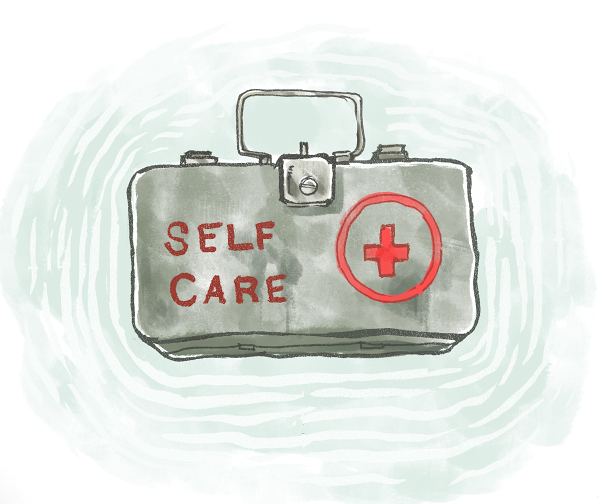
Photo by Thought Catalog on Unsplash


Leave a Reply