

“I felt like a failure. And unsurprisingly, that wasn’t enough to motivate me.”
Sam’s Recommendations: The ‘Anti-Planner’ | Focused Space | The Sukha | Sunsama | Routinery | Focus Noodles | Sleep With Me Podcast | The Productivity Planner | ‘Cleaning Sucks’
If you know anything about ADHD, you know that the tools we use to keep our brains on track can get a little less… shiny overtime.
When I created my first ADHD survival guide, I knew that it wouldn’t be my last, because as ADHDers, we usually have to update our systems on a regular basis.
For me personally, I hit a wall this past year that I would consider a manifestation of “ADHD burnout.” When I first talked about it on Twitter, it seemed to resonate with a lot of you, too.
This particular pattern of burnout involves a cycle of overcommitting, anxious avoidance, and underdelivering that results in shame, depression, and exhaustion for so many ADHDers, especially those of us with people-pleasing tendencies.
In other words? We take on too much, we procrastinate for too long, the stakes ramp up and so does our adrenaline, until we crash and suddenly… we’re unable to do anything.
And the shame of not doing “enough” can eventually urge us to commit all over again, until the cycle starts anew.
When this happened to me, I felt like a failure. And unsurprisingly, that wasn’t enough to motivate me.
Neither of us are failures, though.
If ADHD burnout has completely derailed your ability to get stuff done, or you just can’t seem to focus despite the tools at your disposal, you aren’t alone.
A lot of us have relied on that last minute adrenaline and self-deprecation to motivate us in the past. And here’s an unfortunate fact about relying on adrenaline and bullying to fuel us: it was never going to be sustainable, was it?
When it worked, it worked (well, sort of). But it probably wasn’t going to work forever — we can only withstand so much stress and shame.
It makes sense that your tools need a refresh. Mine did, too. So I set out to do the research, again, on how to create a system that worked for me. And this time, I came up with some tools that I knew I had to share.
So how did I manage to get my sh!t together all over again? These are the tools I used that I’m hopeful can help you, too.
Transparency Statement
I was not paid to include any product on this list — I selected each of these personally because I’ve used them, researched them, and coached folks with them as well, long before this article was planned!
I do include a few affiliate links where possible, but you’re under no obligation to click through! 💛 To learn more about my policy around affiliate links, click here.
1. Your Encyclopedia of ADHD Coping Tools: The Anti-Planner by Dani Donovan
How do I say this without sounding a little dramatic? I’ll just be blunt: This is the best resource you can buy to support your ADHD brain.
It’s not actually a planner. It’s an illustrated guide of every coping tool you could possibly need to support you in doing stuff you just don’t want to do.
On the author’s purchase page alone, there are 245 five-star reviews.
And I need you to understand — well, I’m sure you know this — we ADHDers procrastinate, forget, go on side quests and never come back. But hundreds of us loved this guide so freaking much, we made a U-turn and remembered to tell you about it.
Is that not evidence enough of how spectacular this book is?

Everything about this guide is neuro-affirming and intuitive to use, and you don’t need to read it from cover-to-cover — you can use the tabs on the side to identify what you’re struggling with (like if you’re disorganized, unmotivated, or overwhelmed), or just flip to a random page when you’re procrastinating.
Did I mention the artwork here is brilliant? The visual design is top tier. And as someone who’s also autistic, and literally gets overstimulated by chaotic or crowded designs (lolsob), this book is just… *chef’s kiss*
Buy the book directly from the author — you don’t want a knock-off, trust me! — and thank me later.
TL;DR: This is for you if…
You have ADHD. Or even if you don’t, honestly. This is a perfect resource for getting sh*t done without shaming or blaming yourself.
Pricing: $58 USD (but $48 USD when it goes on sale!).
This might seem spendy, but you’ll see why it’s worth every cent when it arrives.
2. For Structure and community: Focused
Getting out of bed in the morning and starting my day is one of the hardest parts of ADHD, at least for me. So when I first heard about focused a few years ago, I knew I had to try it.
Focused, an online support community for accountability, has been incredibly helpful in shaping my mornings, while providing other support options throughout my workday.
Focused offers several morning calls in different timezones, offering direct, live support to those of us who need it. You’ll join a community of focusers to meditate, set your goals for the day, and block off time on your calendar to complete your tasks.
You’ll then have the option of sending your goals to a group facilitator, who will email you at the end of the day to see if you’ve completed your goals.
There are also focused work sessions throughout the day, where folks join and turn cameras on to work alongside each other. The platform now has the wonderful addition of an app and free weekly workshops, making it an even more robust resource.
In my experience, it’s a supportive, thoughtful, and caring community. And as a freelancer who doesn’t answer to a manager anymore, having the extra layer of accountability has been a huge help in getting me going every day.
TL;DR: This is for you if…
You thrive with direct accountability and working alongside others, and would benefit from a neuro-affirming community dedicated to compassionate productivity.
Pricing: $39 USD per month.
Use code “SDF9OFF” and you’ll get $9 off your monthly membership after your free trial!
3. For Deeper Focus Work: The Sukha
I can’t emphasize enough how much The Sukha has helped me (and a lot of my coaching clients, too).
The Sukha, in short, helps you organize your tasks for the day and turns them into a playlist with focus music or beats, along with other support features like:
- A global body doubling experience for extra accountability
- A virtual coach overlaid on your music, prompting you with encouragement, reminders of how long you’ve been working, and how much time is left
- Audio and visual refocus reminders when you navigate away from the window you’re working in
- The ability to sync the app with your phone and lock it
- Integrations with Spotify, Asana, Slack, Google Calendar, and more
- Silencing your notifications to ensure you can concentrate
- Breathing exercises, reminders to stretch and look up from your screen, and other wellness supports
This app is designed with neurodivergent brains in mind, creating the ideal circumstances for deep work with a layer of accountability to keep you on task.
The Sukha takes away the guesswork of “how the heck do I focus right now?” It sets you up for success by coaching you through difficult moments, and helping you organize your tasks in a sensible way.
There are so many thoughtful details that will make your working experience much more enjoyable. This quick demo on YouTube is a great intro if you’re curious to see it in action!
TL;DR: This is for you if…
You struggle to sit down and stay focused. This app helps instill good working habits and structure, while removing distractions so you can do your best work.
Pricing: $10 USD per month.
4. For organizing your day: Sunsama
I’m going to be brutally honest about Sunsama: I didn’t think I was going to like it.
When they initially reached out to me to check out their app, I ignored them for several weeks. (In my defense, I get a lot of “look at this app!” emails, and they’re rarely ADHD-friendly.)
It looked like every other app promising that it could do everything for you. But after one too many unruly to-do lists and not really understanding how to budget my time, I decided to try it.
And y’all, it’s amazing.
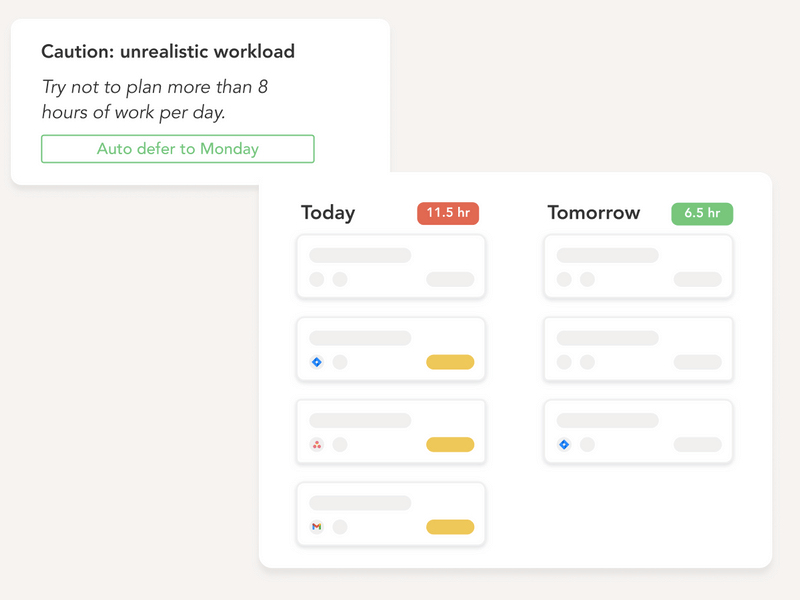
Sunsama is a daily organizer and calendar that integrates with several of the major apps people use for their workflow, including Google calendar, Gmail, Asana, Trello, Notion, Todoist, Slack, and more.
It basically gathers all the apps you’re using, streamlines the information, and helps you build your to-do list for the week.
My favorite function is that I can check my email and calendar directly in Sunsama, and then I can literally drag and drop individual emails and events directly into my to-do list.
No more forgetting to respond to high priority emails — it’s linked directly in my to-do list, along with all my events for the day.
TL;DR: This is for you if…
You rely on a to-do list to get things done, but need your to-do list to be a little… smarter. You might also be someone that relies on a lot of different apps for your job — this is the one feature that will make your life ten times easier (at least).
Pricing: $20 USD per month.
5. For keeping a routine: Routinery
When I work with AuDHD folks especially, we inevitably talk about how structure is something we both need but often resist. This is where I’ve found Routinery to be incredibly helpful.
Routinery allows you to set up a “playlist” for your routines and habits, walking you through each task with a timer and a visual cue.
The visual cues are amazing for neurodivergent brains, and the timer helps keep folks on track by increasing time awareness. It also has a “streak” function (tracking how many days in a row you complete your routine) and recurring notifications for some added incentive, but it’s customizable so that it never feels punishing or deflating.
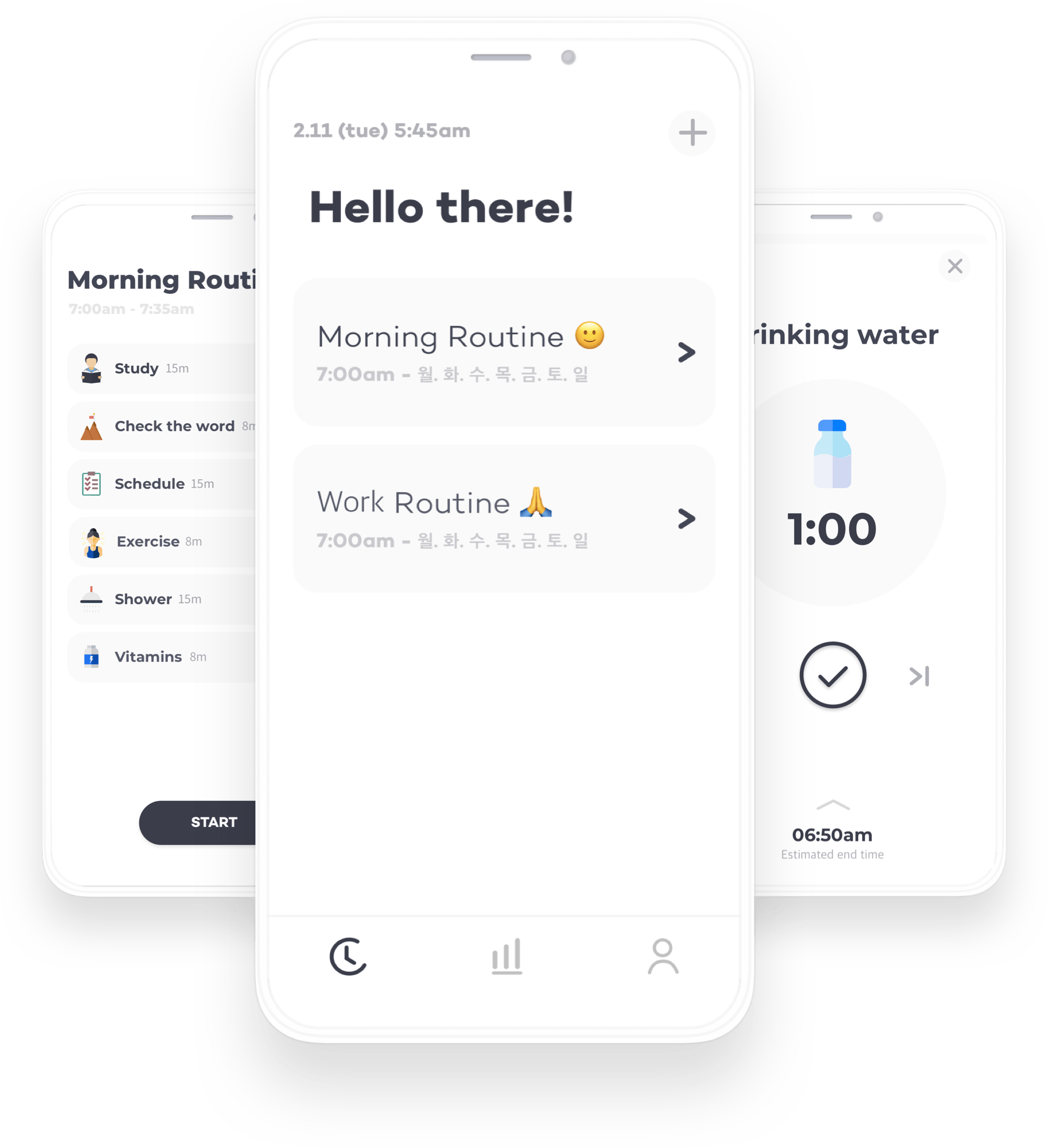
I like to set up “basic” and “bonus” routines for each morning and night.
My basic routine is for when I’m low energy and just need to get the essentials out of the way. My bonus routine is for when I have more spaciousness and energy, and want to luxuriate a little more while I’m doing my routine.
For example, having an elaborate skincare routine doesn’t work every night, but I include it in my bonus routine for the nights I do have the time!
I’ve also created custom routines for feeling my feelings, where I include my go-to coping strategies and somatic practices, and routines for physical therapy exercises that I tend to avoid otherwise.
TL;DR: This is for you if…
You struggle to stick to a routine, and would benefit from an app that offers visual cues as you complete your routine.
Pricing: $2.99 per month or $21.99 per year.
6. For gamifying tasks: Focus Noodles
A lot of folks with ADHD benefit from gamified apps (put another way, apps that take our everyday tasks and make them feel like a game).
Gamified timers in particular are a great option, as they help to keep our attention on the task at-hand while offering us a reward for maintaining our focus.
The app that I personally keep picking up again is Focus Noodles.
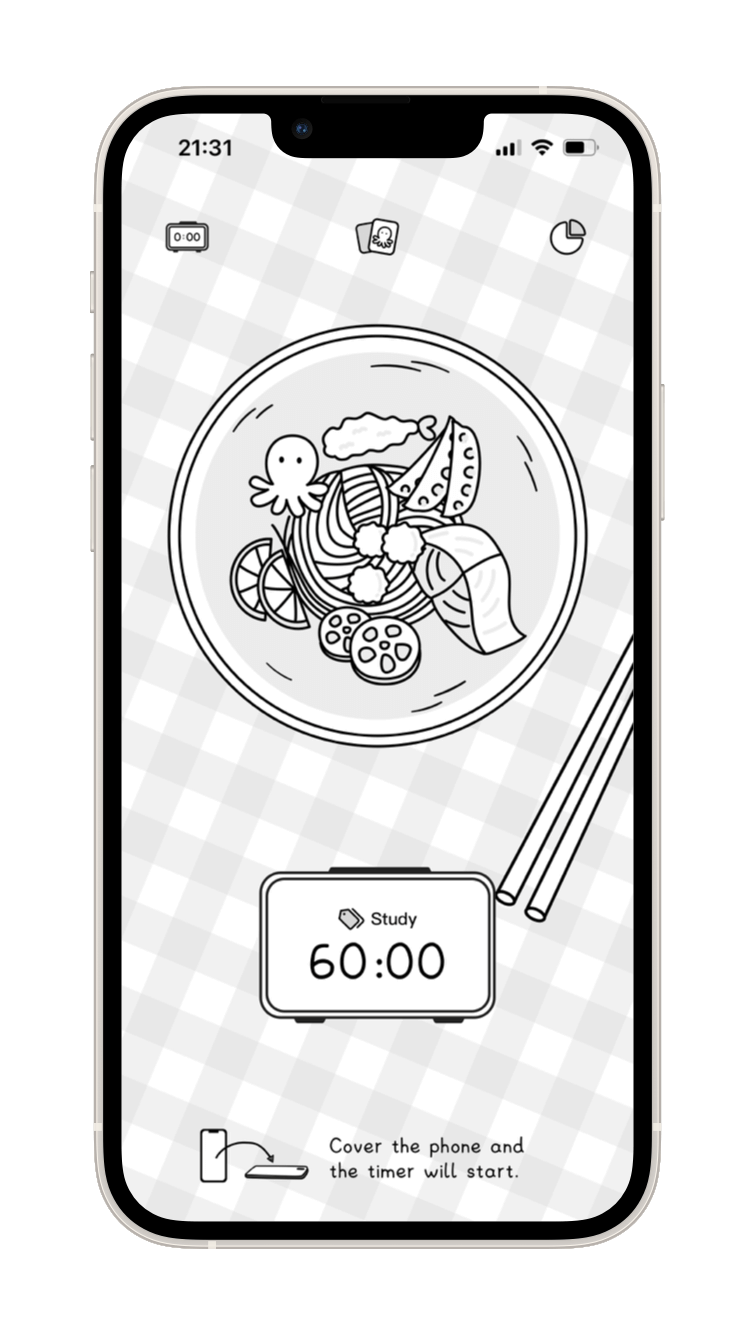
With Focus Noodles, you choose the amount of time you’d like to focus for, with each amount of time having a unique ramen “recipe” that will be completed after that time has passed. As you cook more and more, your chef will level up, and you’ll collect recipe cards.
What makes this app especially helpful is that it’s designed for those of us who keep picking up our phones reflexively.
The app uses the front-facing camera on your phone to ensure your device stays face-down. If you flip your phone over before your ramen has cooked, a light will flash, and the app will remind you that your timer is still going. If you don’t place the phone back down, the recipe will fail.
The illustrations give the app a cozy, simple, and warm vibe, and the interface is very easy and intuitive to use, making it a favorite that I’ve returned to again and again for many years now.
I personally don’t like apps that feel like punishments, but I do think there’s some value in simulated accountability. Focus Noodles is a wonderful balance of these incentives, where the gaming aspect makes it fun without feeling like added pressure.
TL;DR: This is for you if…
You want a fun app to keep you on task and prevent you from picking up your phone.
Pricing: One-time cost of $3.99 USD.
Note: It’s only available on Apple devices for now. :'(
7. For better sleep: Sleep With Me Podcast
Do you tend to procrastinate on going to bed? I did, too. The only thing I’ve found helpful is making a nightly routine that I actually enjoy, and the building block I started with was finding a sleep podcast that I genuinely love.
To that end, I’ve been a Sleep With Me Podcast listener for about five years now, and it was my starting place when I finally realized I needed a proper wind down at night.

Scooter, the host of the pod, is probably the most parasocial relationship I’ve developed online — I really do feel like this guy is my friend (he was “there” when my cat passed away, my ex moved out, I lost my job…), even though I cognitively register that he doesn’t actually know me.
But that’s part of what makes Sleep With Me such a unique and special podcast.
Scooter essentially rambles in circles in a silly, entertaining (but not too entertaining!) way, offering comfort in the deep dark night. His voice is the perfect mix of friendliness and sleepiness, keeping things mild and soothing.
If you fall asleep, great! (I do, every time.) If you don’t, you still have company on those nights when you’re tossing and turning and feeling alone.
My personal favorites are his recaps of television shows like The Good Place and British Bake-Off, and his commentary on the Trader Joe’s flyers. I also adore when his friend Ray is a guest — but honestly, I don’t make it to the end of any episode because it really does knock me out.
It’s worth noting, like Scoots does in the podcast, that most people need to give this show a few tries to get used to it. The first two times I listened, I was deeply unsure of it all, but grew to really love it.
TL;DR: This is for you if…
You have trouble sleeping or just want a little company at night.
Pricing: Free wherever you listen to podcasts!
If you end up loving the podcast, please consider becoming a paid subscriber. 🙂
8. For paper-based planning: The Productivity Planner
For those of us who are a little more old fashioned in their choice of tools, the best planner I’ve found by far is the Productivity Planner by Intelligent Change.
The planner uses a pomodoro tracker (so, working sprints of 20 minutes or so) that you fill in as you work, along with weekly and daily spreads to help you prioritize your most important tasks.

It increases time awareness, too, by having you estimate the amount of time a task will take and writing in the time it actually took. For ADHDers struggling with time estimation, this planner will literally train your brain into better estimations over time.
This planner is also dateless, so if you’re someone that shuffles through tools and likes to pick them back up later, this is a great option for that.
TL;DR: This is for you if…
You prefer analog solutions for planning your day, and need a little help structuring your tasks.
Pricing: $30 USD.
Use code “SAMDF10” to get 10% off your entire purchase!
9. For a More Manageable home: ‘Cleaning Sucks‘ by Rachel Hoffman
Cleaning your home, especially after letting it go for a while, is intimidating AF. Plain and simple.
But Cleaning Sucks by Rachel Hoffman makes it a little easier on our brains. This guided journal walks you through different projects in small, manageable chunks, and invites you to reflect on the process with space to write.
I recommend this journal for anyone who is throwing their hands up with no idea where to begin. The gentle advice and straightforward prompts makes cleaning up feel like a doable project instead of an unruly disaster.
It does require some commitment, but it’s a commitment that feels easier to make because of how approachable the journal is.
I appreciate especially that this journal isn’t just a glorified to-do list, but instead, helps you unravel the more emotional aspects of cleaning, like shame, perfectionism, and procrastination.
TL;DR: This is for you if…
You want to start cleaning your space but you have no idea where to start.
Pricing: $15.80 USD.
Remember: Productivity isn’t about perfection.
Too often, talking about “productivity” becomes a smokescreen for masking our perfectionism.
But to me, productivity doesn’t mean you meet every goal you set and complete every task on your to-do list!
Rather, I think of productivity as a feeling of efficacy — feeling empowered and at ease and comfortable while you work.
Forget what capitalism has told you about the hustle and grind. I think productivity, from a neurodivergent perspective, is about having more agency, being able to engage with our lives and our labor on our own terms.
So many ADHDers are waiting for a magic bullet that lets us “keep up” with the norm. But in actuality, I hope we can take the tools available to us and learn how to structure our lives in ways that are uniquely ours.
As one of my favorite artists, rani ban, says, “Everyone will tell you something different. So just do it your own way.”
—
☑️ Up-to-date! This checkmark means that this content has been reviewed and updated for our relaunch in January 2025. Some earlier comments left by our readers may therefore be out of context.
Photo by Helena Lopes on Unsplash



Leave a Reply